
Packing Tips That Make Moving Easier
Pack for safe carrying, efficient van loading and a much easier first night.
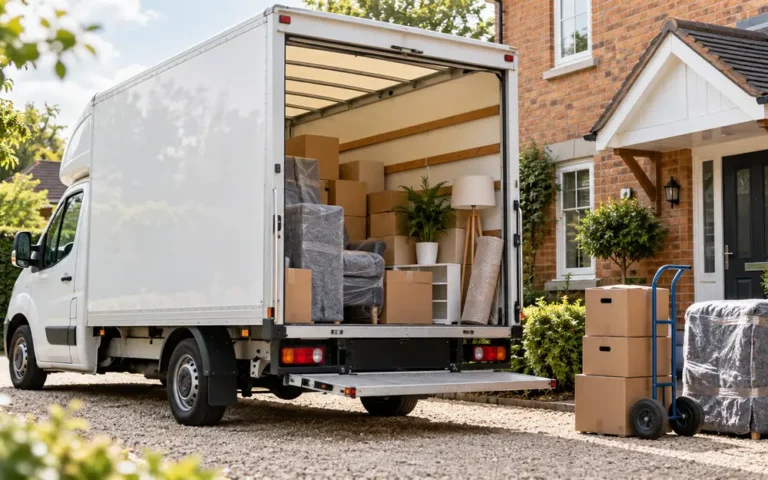 Good packing saves time twice.Once during loading, again during unpacking.
Use the right box for the weight
Small boxes are best for books, tools and dense items. Medium boxes suit mixed household belongings. Large boxes should hold lighter bulky items such as bedding and cushions.
Pack by room
Keeping each room together makes unloading simpler. Label at least two sides of each box so the room name remains visible when boxes are stacked.
Protect fragile items
- Wrap glass and ceramics individually.
- Protect TV screens, mirrors and artwork from direct pressure.
- Fill empty space so objects cannot move inside the box.
- Do not overload fragile boxes simply because space remains.
Prepare furniture for carrying
Remove loose shelves, empty heavy drawers, secure doors and dismantle furniture where it materially reduces size or avoids damage.
Room-by-room shortcuts
Related guides
Keep planning your move
Questions
Frequently asked questions
How heavy should a box be?
Heavy enough to use the space efficiently, but light enough for one person to carry safely.
Should I empty drawers?
Usually yes for heavy or fragile contents.
How should I pack a TV?
Use the original box or a purpose-made TV box with proper screen protection.
Packing for the van, not just the cupboard
Think about carrying and stacking
Good packing protects belongings, but it also creates shapes that can be carried safely and stacked efficiently inside the vehicle.
Keep box weights predictable
A box should be safe for one person to lift. Books, records and tools belong in smaller cartons; bedding, cushions and clothing can use larger boxes. Mixing very heavy and very light contents makes handling harder and increases the risk of the bottom failing.
Use uniform boxes where possible
Boxes of similar sizes stack more efficiently and waste less van space. Reused boxes are fine when they are strong, dry and close properly, but damaged cartons should not be trusted with fragile or dense items.
Protect corners and surfaces
Furniture blankets protect broad surfaces, while corner protectors, wrap and cardboard help on exposed edges. Glass shelves and loose components should travel separately rather than remaining inside furniture where they can move.
Label for unloading
Write the room and a short description on two sides of each box. “Kitchen — glass” is more useful than “misc”. If a box must remain upright, mark it clearly.
Bag small furniture hardware
Screws, bolts and fittings from dismantled furniture should go into labelled bags fixed to the relevant item or kept together in a clearly identified hardware box. Photograph the furniture before dismantling if reassembly is not obvious.
Pack an accessible first-night box
Do not bury bedding, toiletries, medication, kettle, mugs, chargers and basic tools at the front of the van. Load them last or keep them with you.
Packing toolkit
Plan the load as well as the boxes
Ready to plan your move?
Send both postcodes, your inventory or photos and access details for a clear quotation.